


C1-02 Research on Resource Recycling of Used Plastics Generated from Contact Lens Manufacturing and Distribution
Collaborating Organization
Menicon Co., Ltd.
Research and Development Overview
Objective: Research on Resource Recycling of Used Plastics Generated from Contact Lens Manufacturing and Distribution
Commercial contact lenses are distributed not only as the lens itself but also together with individual packaging lens cases. In particular, with the growing adoption of daily disposable contact lenses (1Day Dispo), the amount of plastic used in lens cases (post-consumer recycled plastics: PCR) has been increasing.
Lens cases are primarily made of polypropylene (PP), a material characterized by high transparency, low odor, and minimal contamination because the filling solution is saline. These properties suggest that even after use, the material has strong potential to be utilized as a relatively high-quality recycled plastic resource.
In the current recycled plastics market, demand for high-quality recycled materials is expanding in applications such as home appliances and automotive components. Securing a stable supply of high-purity PP resources has therefore become an important challenge.
At the same time, various types of used plastics (post-industrial recycled plastics: PIR) are also generated during the contact lens manufacturing process. Accordingly, there is a growing need to establish an integrated circular resource system that incorporates both PCR and PIR plastics.
Challenges
- The contact lens market consists of products from multiple manufacturers and brands, and different types of polypropylene (PP) are used in post-consumer recycled plastics (PCR). Therefore, technologies capable of recycling mixed used plastics are required.
- Post-industrial recycled plastics (PIR) generated during manufacturing processes often contain residual contact lens materials. These contaminants can cause undesirable properties, such as reduced mechanical strength, making the recycled material unsuitable for high-quality applications.
- Current collection rates for PCR materials remain low, resulting in inefficient utilization of recyclable resources. In addition, contamination introduced during collection processes hinders the design and production of high-quality recycled materials.
Progress and Achievements
Physical property measurements of lens cases from disposable contact lenses distributed in the market were conducted for each manufacturer and, furthermore, for each brand within the same manufacturer, following the standard format. Through this work, foundational data were obtained, enabling a comprehensive understanding of quality trends among disposable contact lenses distributed in Japan.
Based on market share data for disposable contact lenses, blended lens case materials have been prepared, and corresponding physical property evaluations are currently being conducted to investigate the characteristics of blended recycled materials.
Regarding contamination by lenses and aluminum seals during case collection, collaborative efforts among participating organizations are underway to establish effective removal methods.
To promote circular resource utilization related to contact lenses, the “1Case Project” was launched and expanded. As part of the initiative, dedicated 1Case Project collection boxes have been installed primarily at contact lens retail stores. Both the number of collection sites and the volume of collected materials continue to increase.
The project activities have also been extended to municipalities, companies, and educational institutions. In addition, active outreach programs and events are being conducted to further promote awareness and dissemination of the 1Case Project.
At the frontline of lens case collection, preventing contamination by foreign materials is critically important. Accordingly, efforts are being advanced not only to improve the quality of PCR materials but also to promote sociological research related to collection behavior and resource circulation systems.
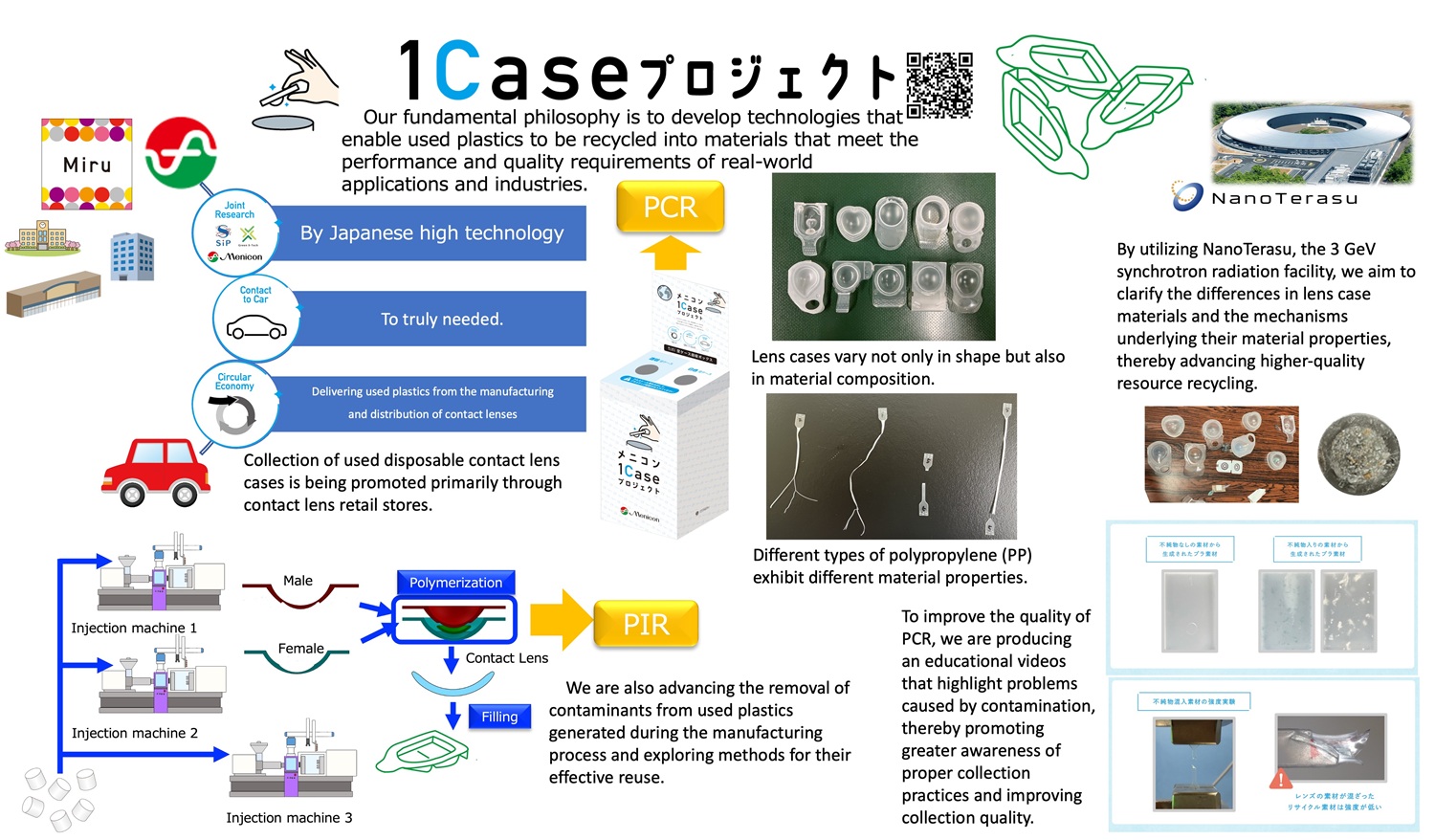
1 Case project overview