


C1-09 Quality Evaluation for Application of Recycled Materials to Automotive Parts and Development of Automotive Parts
Principal Investigator
TAMAGAWA Yoshihisa (Moriroku Co., Ltd.)
Research and Development Overview
In response to the proposed ELV (End-of-Life Vehicles) Regulation*1 in Europe, there is an urgent need in Japan's automotive industry to establish a recycling system capable of providing high-quality and stable supply using recycled plastic materials.
This research aims to establish technology for applying recycled polypropylene to automotive parts, conducting physical property evaluation and performance verification using actual product shapes, while leveraging our track record and expertise as an automotive parts manufacturer to contribute to promoting the practical application of recycled materials and improving technological capabilities in the automotive field.
*1 Proposed End-of-Life Vehicles Regulation: EU regulation concerning the disposal and recycling of end-of-life vehicles
Progress and Achievements
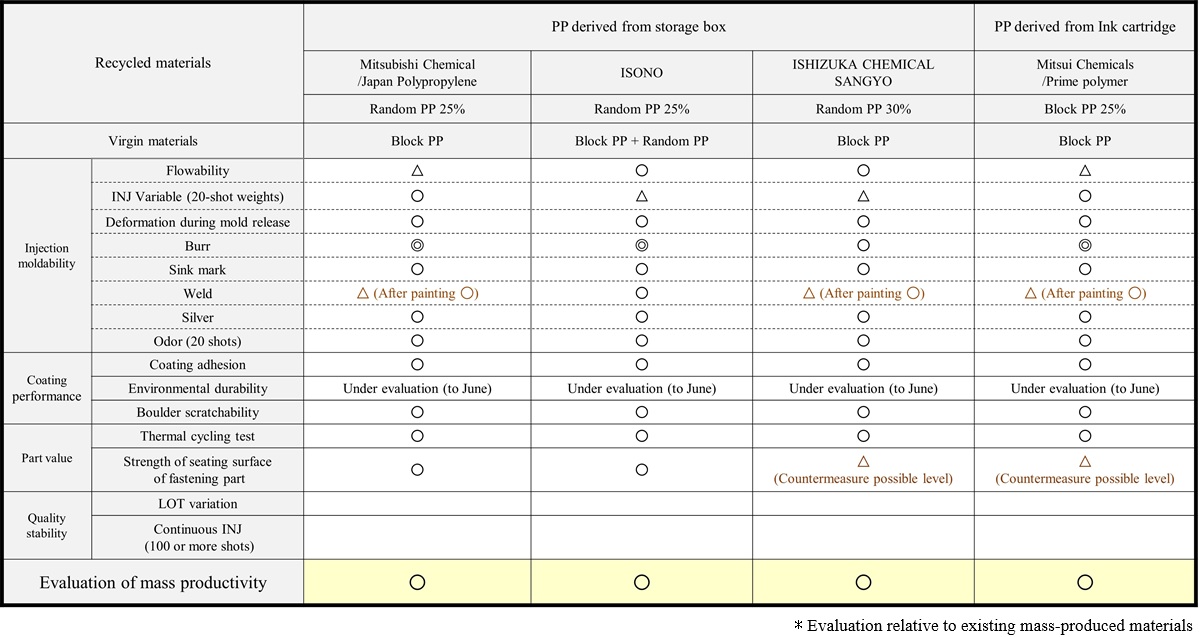
After discussions with the compounder, evaluation was initiated using materials with a recycled material content of 25-30%, targeting JAMA composite reinforced PP [1]. Although some materials did not meet the physical property requirements, evaluation was conducted to confirm the applicability in actual product shapes.
As the first stage of verification, preliminary verification of INJ-ability and paintability was conducted using our company's test piece molds. As a result, no significant problems were observed compared to mass production materials (virgin materials), and it was determined that verification using mass production molds was feasible.
As the second stage, evaluation of INJ-ability, paint adhesion, and marketability was conducted using the mass production mold. In the INJ molded products, weld lines tended to be slightly more visible compared to mass production materials, but they were concealed after painting, and the appearance was at an equivalent level to mass production materials.
In the performance evaluation tests using actual product shapes, the results showed that 2 out of 4 materials had insufficient seat surface strength at the fastening portion with the body; however, prospects were obtained that this can be addressed by reviewing the specifications and structure of the mounting portion.
Note that some environmental durability tests are still ongoing (scheduled for completion in June 2026); however, prospects for mass production application have been obtained at this time. For mass production application, it is important to evaluate the INJ stability during continuous shots and the influence of variation between material lots, which was positioned as a future examination item.
This verification suggested the applicability of recycled materials to automotive exterior parts.
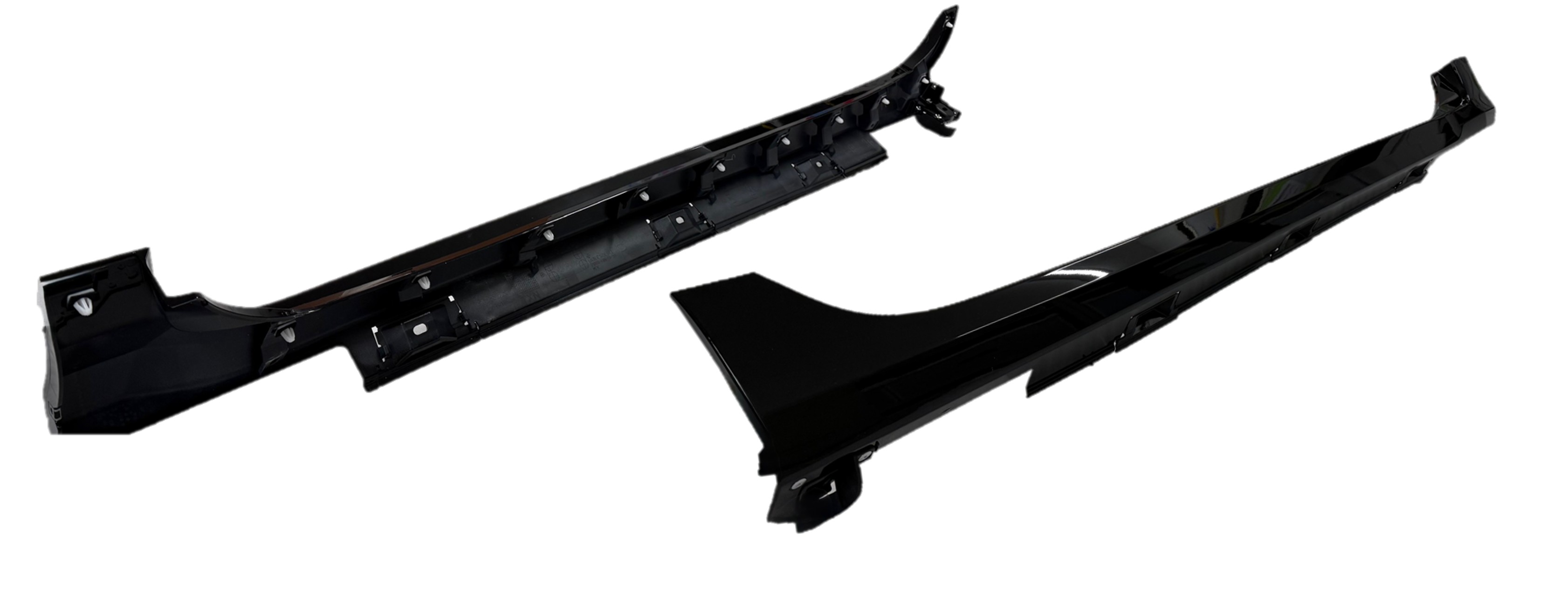
Fig. 1. Side spoiler molded using a mass-production mold
Table 1. Evaluation results of recycled polypropylene