


A2-01 Requirement definition and rule formation for digital product passport in Japan
Principal Investigator
ITSUKI Seichu (Nomura Research Institute, Ltd.)
Research and Development overview
Based on regulations and rules concerning DPP (Digital Product Passport) requirements in Europe, we will establish related rules, including the ideal state of data formats, security for data utilization, and data access control necessary for data linkage between the manufacturing (upstream) and recycling (downstream) industries of plastics in Japan.
In creating these rules, alongside broad discussions and consensus-building among industry, government, and academia stakeholders, we will utilize individual company traceability systems currently under development and "PLA-NETJ," which is being developed in parallel with this R&D project. By conducting demonstration experiments regarding the manufacturing and utilization of recycled plastics and data linkage in actual supply chains, we will ensure that rules and requirements are practical, thereby enhancing the effectiveness of PLA-NETJ. Additionally, to promote the utilization of PLA-NETJ and improve consistency and connectivity with the Battery Passport and other DPPs already under development, we will create, disclose, and update guidelines.

Progress & Outcomes
In FY2023, we conducted interviews with stakeholders from the manufacturing (upstream) and recycling (downstream) industries as well as industry associations (24 interviews in total: 11 downstream, 6 upstream, 2 local governments, and 4 industry associations) to "1. Understand needs." After listing the data items to be included in the guidelines along with their information providers and viewers, we identified areas requiring discussion regarding data utilization scenarios and challenges in data handling (such as the feasibility and conditions for obtaining and disclosing data).
Furthermore, we invited relevant government ministries and agencies to hold a Data Format Requirement Definition Meeting, where we discussed key points for formulating the preliminary draft of the guidelines and the ideal state of industry-academia-government collaboration. At the end of March, we also held a joint meeting inviting the industry associations and upstream/downstream stakeholders who cooperated in the interviews.
In FY2024, based on elements such as data items, needs, and challenges obtained through the interviews conducted in FY2023, we performed scenario analysis and organized these elements. During this process, we aligned our efforts with the data items being considered in the development of PLA-NETJ under R&D project A1-01 and the matching app for recycled plastics under A2-02, aiming to standardize classifications and terminology. We also continuously researched trends in Europe and appropriately reflected these findings in the organized content.
By compiling these findings and exchanging opinions with the Ministry of Economy, Trade and Industry, the Ministry of the Environment, and the Digital Agency, we confirmed there were no discrepancies or overlaps with the initiatives of the relevant ministries. Following this, we released the "Guidelines for Establishing an Information-Sharing Platform for Plastics, Preliminary Draft (Discussion Paper)" in January 2025 (available from the URL above). In addition to issuing a press release regarding the publication on the website of Nomura Research Institute, Ltd., we also published the English version in March 2025. Furthermore, to prepare for gradual updates from FY2026 onwards, we are actively seeking feedback from a diverse range of domestic and international stakeholders by holding opinion exchanges on this content at various meetings (available from the URL above).
In FY2025, in preparation for updating the guidelines, we researched the latest domestic and international trends and held discussions with the participating organizations of Project A regarding the expansion of data items and methods for data utilization. Additionally, as part of our efforts toward international standardization, we visited multiple European government agencies and industry associations involved in circular economy rule-making to share SIP research outcomes and exchange opinions on challenges related to international standardization.
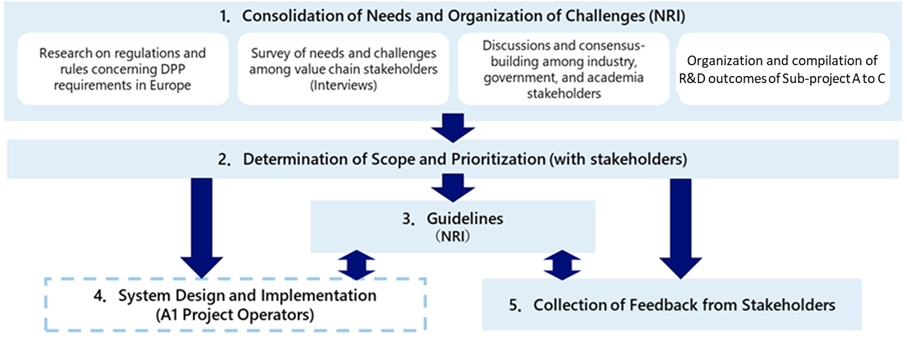
Figure 1. Implementation overview of the R&D