


C1-02 Development of recycled material quality improvement and quality evaluation equipment to expand the use of recycled materials
Collaborating Organization
Isono Co.,Ltd.
Research and Development Overview
Activities: Establishment and operation of a SIP laboratory, development of high-performance tracers, application of data-driven chemistry (informatics) to recycled materials, and development of high- quality recycled materials for automotive applications
In building a Circular economy system,in order to comply with the proposed ELV (End of Life Vehicles) regulations,and to establish recycling systems capable of providing high-quality,stable supplies of recycled plastics for automotive applications with the aim of establishing a model (”X-to-Car”) that converts general consumer plastics (non-packaging plastics and rigid plastics) into recycled plastics for automotive applications, we will conduct formulation verification of high-quality recycled plastics suitable automobile applications.
Progress and Achievements
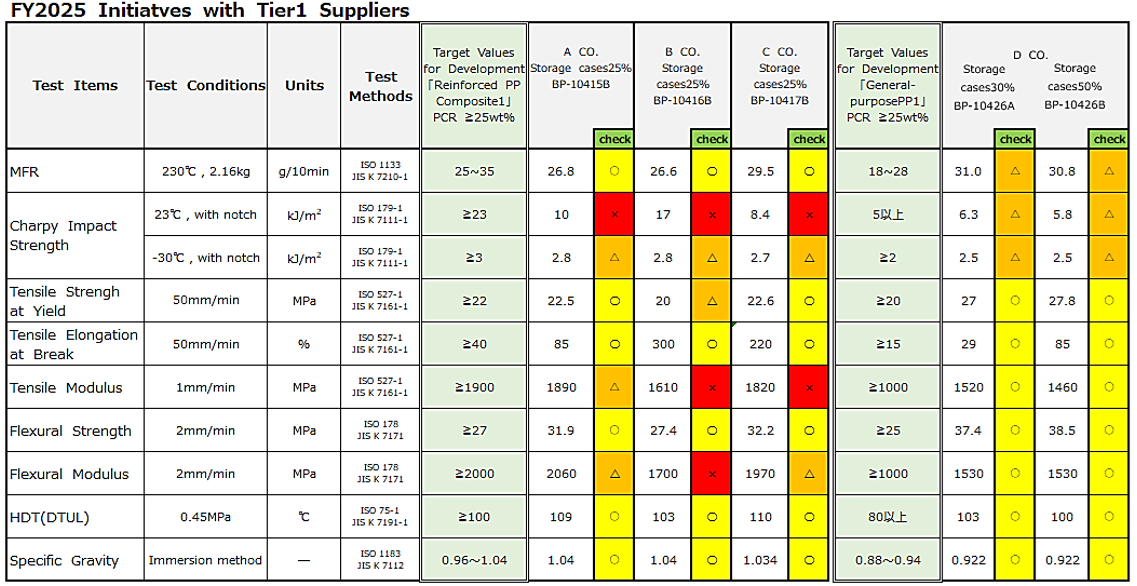
Based on the physical property requirements of automotive interior and exterior standards (general-purpose PP and reinforced PP composites) disclosed by JAMA,we advanced material design using 25% PCR (Post Consumer Recycled) content in accordance with the proposed ELV regulations.
As recycled materials,we used sources such as medical-derived plastics,and contact lens-derived plastics. While holding discussions with various Tier1 suppliers, we conducted validation and prepared prototype materials to ensure suitability for automotive components.
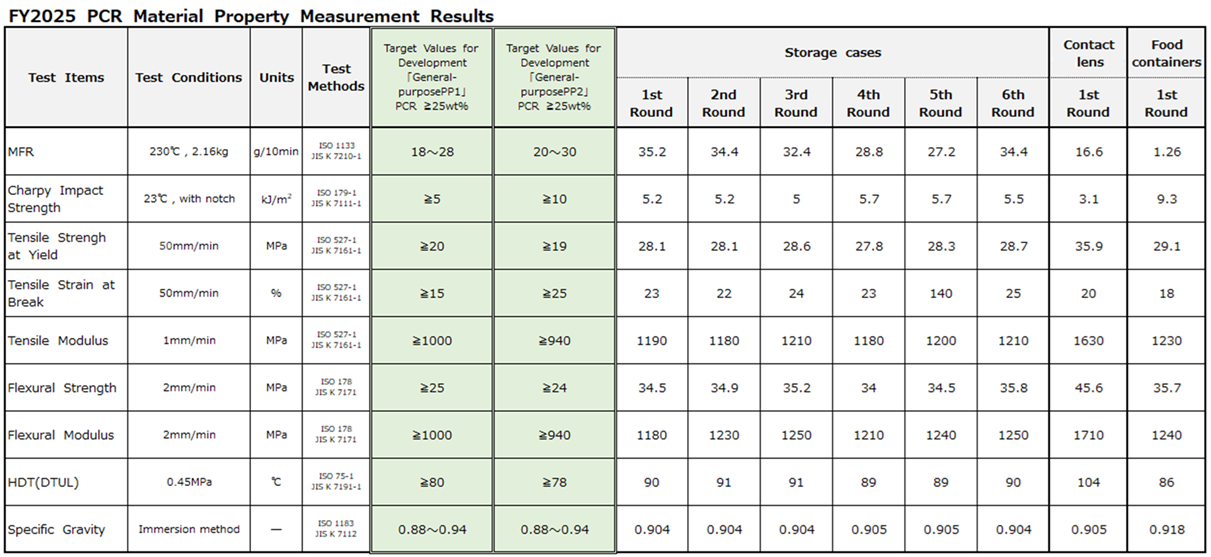
While material design to achieve target physical properties is crucial, the key lies in determining how well the material characteristics of the collected PCR recycled raw materials align with the physical properties (and other requirements) of the final product. It is therefore essential to share information with Tier 1 suppliers regarding factors such as variations in raw material properties, contamination by foreign substances, and the history of additive use, as well as which automotive components the material will be applied to.
Furthermore, in meeting component performance requirements, achieving a balance between quality, quantity, and price is extremely challenging due to factors such as the stable collection of PCR materials, variations in material properties, and increased raw material costs required to meet specifications. Therefore, we will propose initiatives that lead to the further promotion of material recycling by encouraging automakers to consider the “effective utilization of recycled material grades” in their final automotive products.